
5 signs you're actually getting better
How to recognize Long Covid recovery — written by someone who recovered.
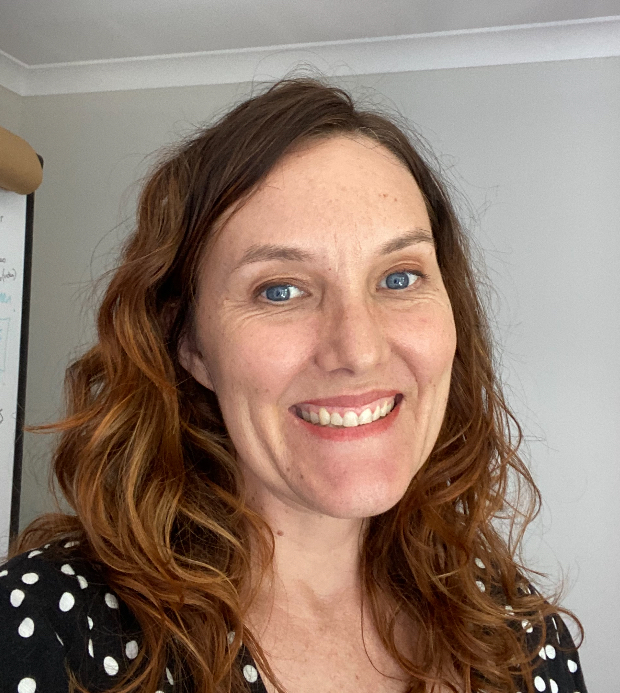
Recovered from Long Covid
Your doctor says your tests are normal.
Your body says otherwise.
A few good days. Then a crash so bad you can't remember what you had for breakfast.
And you're lying there thinking: am I getting better, or is this it?
I know that question. I lived it — POTS, air hunger, memory like fog. The full picture.
Here's what twenty years of Chinese medicine taught me: recovery doesn't look the way you think it should.
It looks like chaos — until you learn what to look for.
Your bad stretches are getting shorter
Track the crash, not the good day.
You're tracking your good days. I did the same thing.
It's the wrong metric. Track how long your crashes last instead.
Recovering crashes don't stop — they get shorter.
Two weeks becomes ten days. Then a week. Then four days.
Your good days may not feel different yet. Doesn't matter. If the bad stretches are shrinking, something real is happening underneath.
When the dips get shorter and the rises get longer, your vital energy is rebuilding. Quiet. Slow. Real.
Shorter crashes are recovery.
Your symptoms are shifting — not repeating
Change is a better sign than silence.
Months of crushing fatigue — then suddenly headaches instead. Or a symptom you've never had before.
People panic. They think they're getting worse.
Usually they're not. Usually the body is finally strong enough to fight again.
Recovery happens system by system. Symptoms that move mean layers are clearing.
Symptoms frozen in place for months can mean the opposite — the body has stopped trying.
When the battlefield shifts, your body showed up to fight. I'd rather see change than sameness.
Shifting symptoms usually mean movement — not decline.
You can feel a crash coming
Your early-warning system is coming back online.
Early on, crashes come out of nowhere. No warning. Just devastation.
Then one day, you notice something before the crash.
A particular quality of tiredness. A certain headache. Your sleep changes first. Your heart does a thing.
Those signals are yours alone. That's the point.
Recognising them means your nervous system is coming back online. Your body is talking to you again — not just crashing on you.
Reading subtle signals is the heart of TCM diagnosis. When you start reading your own, your body's wisdom is returning.
Feeling a crash coming is progress.
This guide shows you what to look for.
It can't tell you what it means for your body.
Inside the membership, Dragon learns your pre-crash signals and tracks your trajectory — and Diana reviews everything.
Learn how it works$15 a week · no lock-in · cancel anytime
Your triggers hit less hard
Same trigger. Less damage. That's recovery.
Coffee used to wreck you for three days. Now it's an afternoon.
A walk used to cost a week. Now you're just tired tomorrow.
Your thresholds are rising. Not because you're pushing harder — because the foundation under you is getting stronger.
One warning: don't test your limits on purpose. That's how you crash.
Just notice when what used to destroy you is now only uncomfortable.
As vital energy rebuilds, capacity expands on its own. We never push — we watch for exactly this: the foundation is strengthening.
Same trigger, less damage — the foundation is back.
Your bad days follow a rhythm
A crash and a healing reaction are not the same thing.
This is the most important sign — and the least known.
A crash follows overexertion. It's random. It sets you back.
A healing reaction follows a rhythm. It feels terrible — then leaves you higher than before.
The shape I've seen hundreds of times: stability → a hard stretch → a surge of improvement → stability, one level up.
Recovery moves in a spiral. Not a straight line. Each time around, you're a little higher.
Telling the two apart is the difference between panic and patience.
Healing has never been linear — the body cycles between clearing and rebuilding. See the cycle, and you stop fighting it.
Rhythm means healing. Random means you overdid it.
- Your bad stretches are getting shorter.
- Your symptoms are shifting, not repeating.
- You can feel a crash coming.
- Your triggers hit less hard.
- Your bad days follow a rhythm.
If you recognised yourself — breathe.
You are not crazy. You are not making this up.
You might be further along than you think.
Long Covid recovery is real. It's just invisible until you know what to look for.
康Built by someone who recovered
Diana Malone is a TCM-trained educator with over 20 years of clinical experience. After developing Long Covid and recovering through TCM, she created Long Covid Liberation to help others find the same path. This guide is educational wellness content — it does not replace your medical team.